

Wealth Oghenemaro
The Delta State House of Assembly has highlighted a series of legislative reforms aimed at strengthening security, improving revenue administration and enhancing governance across the state as it marked the third anniversary of the 8th Assembly.
Addressing journalists in Asaba on Thursday, Speaker of the House, Rt. Hon. Guwor Emomotimi Dennis, said the Assembly had recorded significant progress in lawmaking, oversight and institutional development since the commencement of its third legislative session.
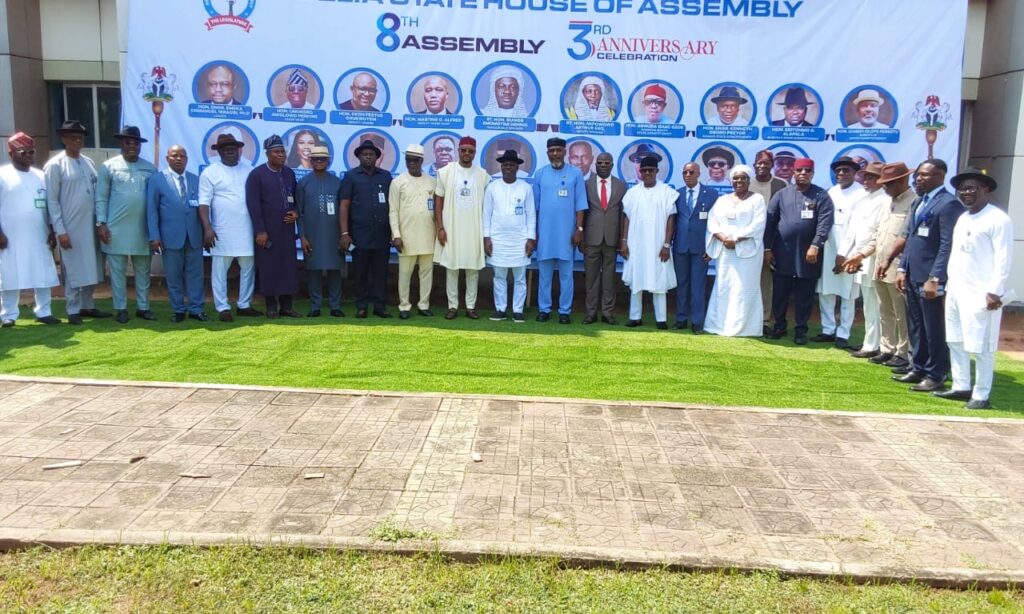
According to the Speaker, lawmakers considered 11 bills during the period under review, comprising five Executive Bills and six Private Members’ Bills. He disclosed that five of the bills had been passed, four of which had already received the assent of Governor Sheriff Oborevwori, while one was awaiting final approval.
Among the notable legislations passed were the Delta State Anti-Terrorism and Anti-Cultism (Amendment) Bill, 2025, and the Delta State Revenue Service Bill, 2026, both of which he described as critical to improving public safety and strengthening the state’s fiscal framework.
Guwor explained that the Revenue Service Bill seeks to streamline tax administration, eliminate multiple taxation and create a more conducive business environment capable of attracting investments into Delta State.
“The overarching objective of the Bill is to harmonise and improve revenue generation in the State, eliminate multiple taxation, and create a more business-friendly environment that will enhance ease of doing business and attract investment,” he stated.
The Speaker further revealed that several strategic bills are currently undergoing legislative scrutiny. These include the Delta State Cybercrime Prohibition and Prevention Bill, the Violence Against Persons (Amendment) Bill, the HIV/AIDS and Hepatitis B/C Anti-Discrimination, Prevention and Protection Bill, the Public Health and Hygiene Bill, the Landlord and Tenant Bill, and the Gaming Board Bill.
He noted that the bills were designed to address emerging social and economic realities while promoting public welfare and protecting vulnerable groups.
Beyond legislative activities, Guwor said the Assembly continued to exercise its oversight responsibilities by reviewing and approving audit reports on the accounts of the Delta State Government, the Delta State Oil Producing Areas Development Commission (DESOPADEC), and the 25 local government councils for the 2024 financial year.
In what he described as a major institutional achievement, the Speaker announced the establishment of a Post-Legislative Scrutiny Department within the Assembly, with support from the Westminster Foundation for Democracy (WFD).
“The Department is designed to systematically monitor and evaluate the implementation and effectiveness of laws passed by the House, assess their impact on the daily realities of our people, and recommend legislative interventions where necessary,” Guwor said.
He added that Delta had become the second state in Nigeria, after Oyo State, to establish such a department, a development expected to improve legislative effectiveness and accountability.
The Speaker also pointed to the growing influence of the Delta Assembly on the national stage, noting that he was unanimously elected Chairman of the Conference of Speakers of State Legislatures of Nigeria. He added that the Deputy Speaker and Majority Leader of the House were also elected to head their respective national legislative forums.
“This unprecedented achievement has elevated the profile and visibility of the Delta State House of Assembly at the national level and reinforces the confidence reposed in our leadership by our colleagues across the federation,” he said.
On staff welfare, Guwor disclosed that the Assembly approved training programmes for its workforce and supported participation in professional development courses. He also commended the state government for implementing the Consolidated Legislative Salary Structure (CONLESS) for Assembly staff and workers of the Assembly Service Commission.
As the House begins its fourth year in office, the Speaker reaffirmed the commitment of lawmakers to people-focused legislation, robust oversight and policies that would promote sustainable development across Delta State.
“As we look ahead, the 8th Assembly remains committed to enacting people-oriented legislation, strengthening oversight functions, promoting transparency and accountability, and supporting policies and programmes that will advance the growth, peace, and prosperity of Delta State,” he said. :::


