By Wealth Oghenemaro and Elohor Foghola
Chairman of Ughelli South Local Government Area of Delta State, Hon. Lucky Avweromre (PhD), has described the resettlement of the people of Okuama back to their community, including the construction of the Okuama Resettlement Centre, as the greatest achievement of his administration in its two years in office. Avweromre, who returned to the council’s helm of affairs 26 years after serving as a councillor and leader of its legislative arm, said his administration had prioritised peace-building, healthcare, education, workers’ welfare, community development and human capital empowerment. In this interview with The Blaze’s Wealth Oghenemaro and Elohor Foghola, the chairman speaks on the challenges posed by the aftermath of the Okuama crisis, disputes among neighbouring communities, community leadership conflicts, payment of primary school teachers’ salaries, council workers’ welfare, his relationship with councillors and traditional rulers, and his partnership with the state government. Avweromre further reflects on his political journey from councillorship to the chairmanship, his years in academia and his determination to translate his knowledge of political science into practical governance.
Below are excerpts from the interview:
Question: It has been over two years since you assumed office as chairman of Ughelli South Local Government Area. Can you take us through your political journey getting here and the challenges and achievements of your administration?
Hon. Avweromre: I started my political journey on December 5, 1998, when I contested for councillorship. Under three political associations at that time not yet political party in this forth Republic. PDP, APP and AD. It was the local government elections that they used in registering these parties. AD didn’t meet the national spread, but because the government wanted three political parties, AD was added to it. So, I became one of the foundation members of the PDP. I contested in 1998 and won election. Could you believe that we had to wait for another six months until the election of the president, the governor, House of Assembly and inauguration was done in May 29th, 1999 before they swore us in in June 1999. So we stayed at home after winning elections for about six months. I served as leader of the legislative arm for three years. I actually wanted to come back at that time but couldn’t make it back as a councillor. But as time progresses, I later served on various boards, including Delta Waterways, where I also became chairman. In 2011, I was appointed Deputy Chief of Staff, Government House, by the administration of late Professor Amos Agbe Utuama, and I served for four years. After leaving office in 2015, I tried to be part of the government at the state but it didn’t work, so I returned back to the class.
I have a Bachelor’s degree, master’s degree and PhD in Political Science. I taught at the Warri College of Education in affiliate to Delta State University, Abraka, and later in 2021/2022 I joined Dennis Osadebay University, where I became Head of Department of Political Science, Public Administration and International Relations. I was involved in the accreditation of the three departments. I was in the classroom when, in 2024, I received the call to return and serve my people. I contested and, with the support of the Governor and leaders of the local government, I won. I returned to the same council where I had served as councillor 26 years earlier, this time as chairman. I have no reason not to perform. I cannot teach Political Science and then come into government without performance. So all those literatures I have writte, all those lectures I have to put into practice.
By the grace of God, on July 15, 2024, that was the day I received the mandate to lead Ughelli South Local Government. For the past two years, we have faced several challenges because I came in at a very turbulent time, particularly during the Okuama crisis, when military personnel were reportedly killed at Okuama. Since then, there have been several challenges within the communities of Ughelli South. However, by the grace of God, the state government has done a lot, while we have also been interfacing with the military, communities and neighbouring local government councils.
Ughelli South is particularly sensitive because we share boundaries with seven local governments, including Patani, Bomadi, Burutu, Udu, Ughelli North and Uvwie with many intricacies surrounding community land and property issues. That has been one of our major challenges.
Question: How have you managed these challenges?
Hon. Avweromre: In the case of the Okuama and Okoloba issues, we met at the Governor’s Office in Warri, where representatives of the affected communities and all the security agencies were present. We entered into a peace accord to ensure there were no further confrontations.
The remote causes of the crisis, particularly disputes over land and fishing rights, are still there. So we also decided to set up a committee with the Bomadi chairman as chairman, myself as co-chairman, the DSS in Ughelli South as secretary and the DSS in Bomadi as co-secretary. Representatives of both communities and their community leaders are also members.
From time to time, we visit the riverine communities. Whenever there is an issue that cannot be resolved through telephone calls, we go there physically. I have personally visited Okoloba more than twice to demonstrate a sense of belonging and remind the people that we are brothers and there is no need to fight.
We also intervened in the conflict involving Gbekebor/Ophorigbala, Egbo-Ide and Ayakromor in Burutu. These were serious everyday issues. There was a time some Ophorigbala people were taken hostage by the Bekebo people. We worked throughout the clock, contacting the state authorities, the chairman of Burutu Local Government and community leaders in Ijaw. The people were eventually released unconditionally.
There have continued to be issues despite some of the land matters having gone to the Supreme Court and judgments delivered. Some people still refuse to abide by the judgments.
About six months ago, we also held a peace meeting at the Warri Annex, involving the affected communities and the chairmen of Ughelli South and Burutu. We extended the engagement to Gbekebor, Ayakromor, Oboro, Olota, Alagbabiri communities. These are Ughelli South communities and communities in Bomadi and Burutu.
Unfortunately, Gbekebor declined to sign the peace accord, saying they needed to consult their people first. Up till now, they have not signed, but we continue to encourage our people to allow peace to reign.
We also have security council meetings. We hold security meetings involving Delta South and Delta Central where we discuss security issues and chat a way forward. At the local level every month or two, where we bring together community presidents-general and other stakeholders to discuss security challenges and where we charge them to maintain peace in their domain.
The Governor has made it clear that where there is a crisis in a community, the local government chairman will be held responsible. We have therefore passed the same responsibility to our traditional rulers, who must ensure peace in their respective kingdoms, and anyone who there is crisis in his or her domain will be held responsible. So everyone is working together, both the chairmen, traditional rulers and community leaders to ensure there is peace.
Another major issue ravaging the communities is community leadership, particularly tenure elongation and the transmission of power through the back door. Some community leaders, after serving their tenure, want to install people who will continue to represent their interests against the wish of the community. This has created serious problems and affected development.
Community elections are often contentious. For instance, in Otu-Jeremi here which is the headquarter of the local government, community elections were held which did not produced a winner but two groups have emerged after the election and both declared themselves winners. The matter has been taken up by the Commissioner of Police in Asaba, and we are awaiting the outcome. Other similar communities are experiencing the same thing. Community leadership problem is a bane to the development Ughelli South Local Government.
However, as i have said earlier, to address this, we brought all the presidents-general together and established a leadership structure, which they elected by themselves, through which we can reach every community and intervene whenever there is a problem.
The legislative arm of the council is also working on an executive bill that will become a bylaw regulating community leadership. It will address the composition of community leadership, their status, tenure, so that tenure will be uniform and processes for emergence. We are also looking at the constitutions of the various communities so that the council’s bylaw can work in synergy with them.
Question: What achievements have you made in health, education and human capital development?
Hon. Avweromre: In the area of health, Ughelli South has 72 communities, so health service delivery is a major responsibility. And because of the importance I attached to health, because like they say, health is wealth, when I came in, and was appointing Supervisory Councilors, I appointed myself as Supervisory Councilor for health so that I can be having first-hand information on any challenges in the health sector.
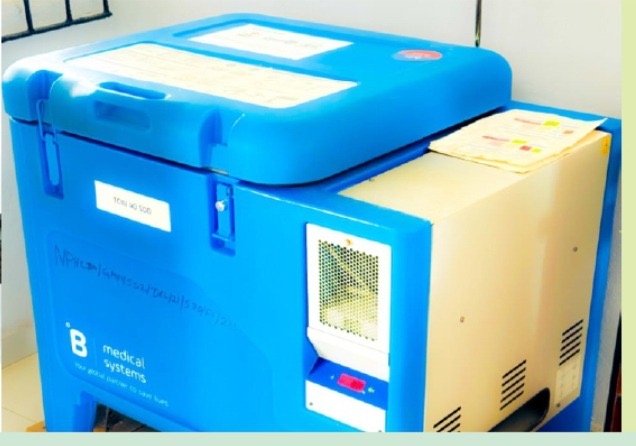
We have renovated several health centres and provided equipment. During our first 100 days, we comprehensively renovated the Okwagbe Health Centre, including solar lighting, facilities for vaccine storage and staff accommodation.
We also completed another health centre that had been abandoned for about 20 years by paying the contractor’s outstanding balance, revoking the project and taking it over. Today, it is being used.
Overall, we have intervened in more than seven health centres across the local government. We also participate in routine immunisation and other health programmes in collaboration with UNICEF and the state government.
We provide incentives for health workers serving in critical riverine areas.
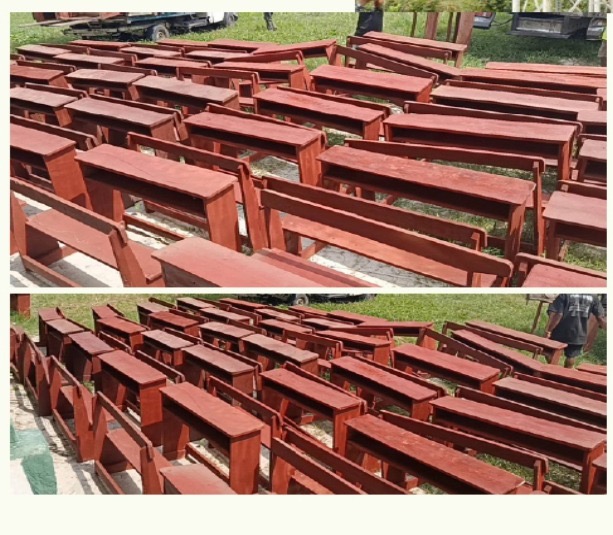
In education, we have renovated more than six primary schools in terms of renovation and provided pupils’ desks and teachers’ tables. At the Egbiagolor Primary School, two blocks comprising 10 classrooms were completely renovated and commissioned by the SUBEB State Chairman, Hon. Samuel Marierie. We have provided. When we came in within just three months, there was a publication that children were sitting on the floor at Otu-Jeremi primary school and when we did findings, we discovered that the state government was doing renovation and in the process, they left the school open, no security, so the desks and chairs were stolen by people and community dwellers. So we have to replace those desks. We also provided desks for Idovwe primary, the two primary schools in Otor-Ewu, we gave to Okparabe, Egbiagolor and other primary schools in the local government.
Wnile we are doing that, the state government, through SUBEB, is also currently carrying out massive renovation in more than 10 schools across the local government. More pupils’ desks are also being provided.
These interventions are gradual because there are many schools requiring attention. We work in collaboration with the State Universal Basic Education Board (SUBEB) to ensure that projects are properly coordinated. We have also provided scholarships to students and financial assistance to people pursuing first degrees, master’s degrees and PhDs.
On human capital development, through the Community Development Department, we have trained rural women in bead-making and soap-making and provided starter packs to enable them to establish businesses. We have also assisted youths undergoing various forms of training. Very soon, we intend to launch a broader empowerment programme covering youths, women and the elderly across the 20 state wards. The plan is to empower 200 persons from each ward. People need to benefit directly from government. Projects are important, but people also need economic empowerment. The Governor has also directed that people should be empowered through cash support and other forms of assistance.
Question: What is the financial condition of the council, how is it faring in salaries and welfare of workers, especially with the primary school teachers’ wage bill?
Hon. Avweromre: We are grateful to President Bola Ahmed Tinubu for policies aimed at revamping the economy. The situation today is different from what it used to be. Ughelli South pays about N270 million monthly as the wage bill for primary school teachers, making it one of the highest in the state because of the number of schools and the size of the local government. Our total teachers’ and council workers’ salary bill is close to N400 million. So, if the allocation is about N450 million, a significant portion is immediately spent on salaries. The council also has other responsibilities, including staff welfare, payment of traditional rulers and the day-to-day administration of the council. The State Education Board has carried out a verification exercise to establish the actual number of teachers working in the local government. They conducted biometric screening and other forms of verification, and we are awaiting the report. There are allegations of people who should have retired, people who falsified their ages and others who are allegedly receiving salaries without attending classes. We hope the verification will address these issues and reduce the wage burden.
Question: How has the administration fared in the area of markets management and environmental sanitation?
Hon. Avweromre: Ughelli South is one of the remotest local governments and is largely rural. We do not have a major urban market like some other local governments. As a speak to you there is no one market that was built and handed over to us. The markets we have today is the market that the local government in partnership with some persons to build. Most of our markets are rural markets owned by communities, although the council partners with communities and individuals to provide structures. Apart from Otokutu there is no other place that is urban in the local government.
On sanitation, we monitor cleanliness monthly through environmental health officers, councillors and the supervisor for health. Community presidents-general and leaders also assist. We uphold the doctrine of cleanliness is near to godliness. We are also opening up canals across the local government for instance in Egbiagolor and other communities we have opened the canals in preparation for the flood season. So that the flood will not be a problem when it comes.
Question: What is your relationship with the councillors and the legislative arm of the council?
Hon. Avweromre: Our relationship is very cordial. I was a councillor and leader of the legislative arm between 1999 and 2002, and I understand the concerns and expectations of councillors because I have been in their position. I have fought before so I know what it feels like being a councillor. So I treat them fairly, I don’t have to wait for someone to come and fight me before I do what is necessary. Last year, despite our limited resources, we provided N10 million constituency projects for each of the 20 councillors, enabling them to execute projects in their respective wards. And our became a model in the state, when other local governments were giving Five Million, others Three Million.We have a strong relationship between the executive and legislature because both arms need each other to function effectively. I do not foresee any crisis between us. I believe one good turn deserves another. One is the husband the other is the wife. I use to say, the legislature is the husband, they appropriate and the wife spends, when the husband gives and the wife comes back from the market and gives the husband a very good meal, then the husband will not have any problem. So that is the model we apply here.
Question: What’s your relationship with the council workers and how have you dealt with the issues of staff welfare?
Hon. Avweromre: When we came in, there were many outstanding staff claims. We decided that we could not focus on political office holders and neglect the workers, because they are the engine room of government. We allocate N5 million every month to settle legitimate staff claims, including expenses relating to training, seminars, transportation and other approved activities. We allocated this money and gave it to the HPM to supervise. We have paid most of the outstanding claims. Today, the workers are looking for new claims to submit rather than chasing old unpaid claims. However, we are also careful to ensure that claims are genuine and properly approved.
We have also renovated council facilities. The chairman’s and vice-chairman’s offices had serious leakages and structural problems when i came in. It was still same buildings as it was 26 years ago when I was Councilor that I met and inherit so I had to put them in good shape. The legislative building was also renovated, furnished and equipped with air conditioners to provide a conducive working environment.
Question: Ughelli South is home to many prominent traditional rulers. What is your relationship with the traditional rulers in Ughelli South?
Hon. Avweromre: Our relationship is very cordial. All the traditional rulers in Ughelli South are working closely with the council. We support activities in their palaces and they also cooperate with us whenever we need their intervention. I don’t have any problem with the six traditional rulers we have. The latest is the Ohworode of Olomu who is the chairman of Benchers.
Since I came into office, I have helped resolve disputes within the traditional council. The problem in Effurun-Otor Traditional Cluncil, i resolved it, they came in agreement and last year we installed the traditional ruler of Effurun-Otor Kingdom. This year, the traditional ruler of Olomu kingdom was installed, although they have a well structured way of ascending the throne but we have to guide it, otherwise people as you know could be funny and may want to take advantage of things. He has been given staff of office from the state government this year. We follow due process in the installation of traditional rulers to ensure that people do not take advantage of the system. The ones I met are there and they are all in good relationship with the local government council.
Question: How would you describe your relationship with the state government under Governor Sheriff Oborevwori?
Hon. Avweromre: We have a very cordial relationship with the Governor. Unlike situations where governors withhold local government allocations, Governor Oborevwori wants us to ea within the limits of our resources. He believes we should have no excuse not to work. He is doing wonderfully well for us. Governor Oborevwori will only have problem with you when you are not doing well. He expects local government chairmen to manage their leaders and people effectively and execute projects. Ughelli South has complex leadership structures, but by the grace of God, we are doing our best. As a working governor he expects you to work, as a man who is humble and manages his various leaders across the state he expects you to be humble and manage your leaders. Because if we are able to mange our leaders very well across the 25 local governments, then 50 percent leadership problem would have been solved. Once you are performing, you will always have the support of the Governor. As my boss, I will continue to work with him and do my best.
Question: What would you say is your administration’s highest achievement or achievements so far?
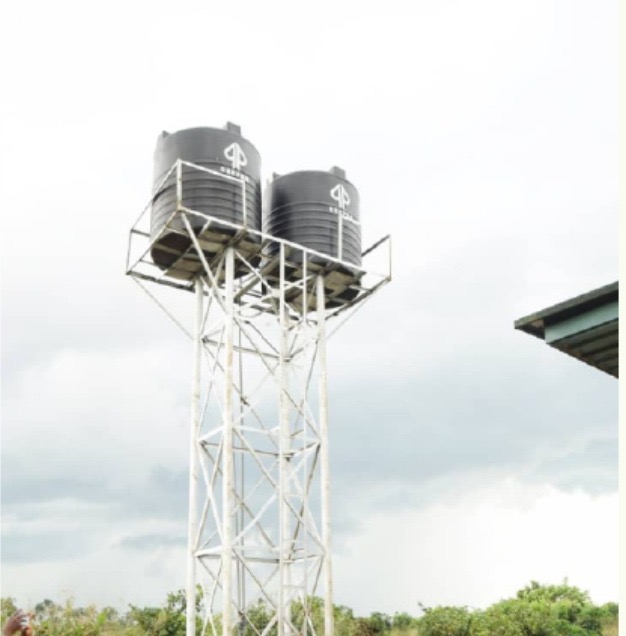
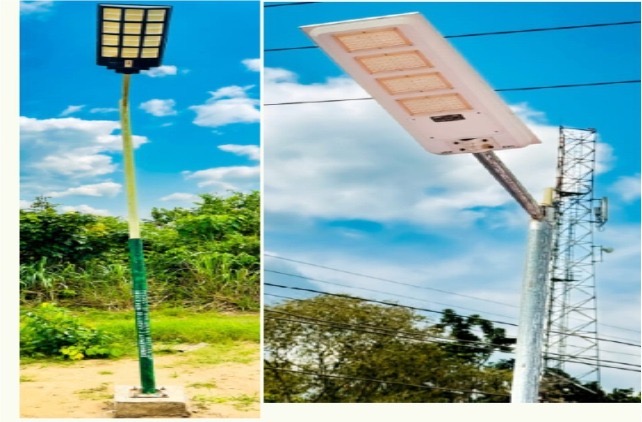
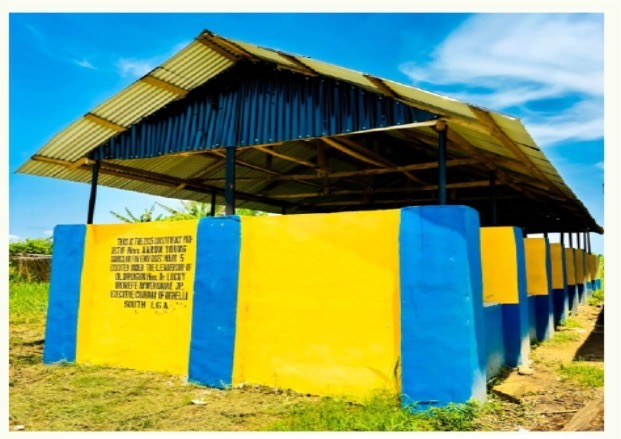
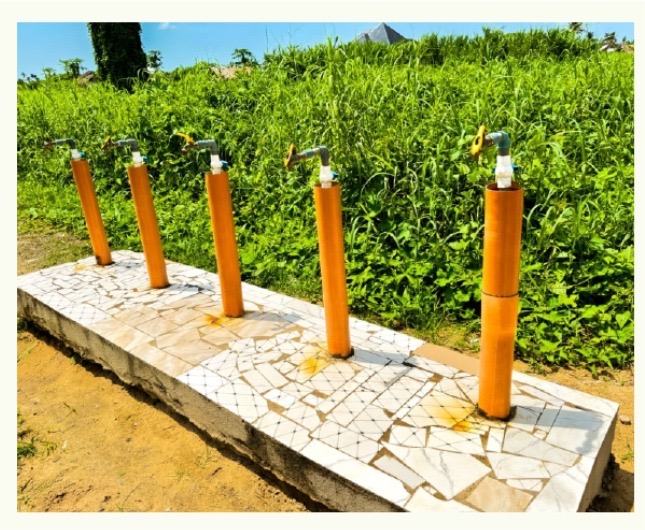
Hon. Avweromre: One of our major achievements is the construction of the Okuama Resettlement Centre. Following the crisis, the displaced people were taken to the IDP camp in Ewu, and the state government promised that we will build a resettlement centre for them. When I came in, I decided that since these are my people, we had to build the Okuama Resettlement Centre. Whatever you are hearing as Okuama Resettlement Centre was built by the local government council. The facility, which was commissioned by the Deputy Governor, was built by the Ughelli South Local Government Council. It has a large hall and about 40 rooms, 20 toilets and 20 kitchens. We also went to Lagos to procure solar-powered water equipment because we did not want to depend on fuel-powered water systems.
Once you are building a structure in the riverine area the cost is more than twice of what it takes to build similar structure in dry areas. The project cost almost N400 million. Building in the riverine area is very expensive because materials have to be transported from here to Okwagbe and then by barge to Okuama, with additional costs involved in moving through communities, because you have to settle communities along the roads so that they will not disturb the materials as they are moving. I am happy that the displaced people have now returned from the camp and are occupying the facility.
The state government has also approved and completed a six-classroom block for the primary school, another six-classroom block for the secondary school and a health centre, which are already in use as we speak. Also, because of that Resettlement Centre I constructed, international groups and Christian organisations have also expressed interest in supporting the community with housing projects.
We must commend Governor Oborevwori for his efforts in interfacing with the military and creating the conditions that allowed the people to return safely.
Another achievement is our intervention on the road linking Otu- Jeremi to Ekakpamre and the ECN junction. The road had become almost impassable. We worked with some companies operating in the area, secured equipment and carried out remedial work to make the road passable. The state government has now approved the total reconstruction and resurfacing of the road from the express junction to ECN, and the contractors have been mobilised. We are hopeful that they will return to site and deliver a durable road for the people.