

By Wealth Oghenemaro
Delta State Governor, Rt. Hon. Sheriff Oborevwori, has called on Seplat Energy to deepen its commitment to inclusive development by ensuring greater representation of host community indigenes in its leadership structure, even as he acknowledged the company’s commendable efforts in community empowerment and corporate social responsibility.
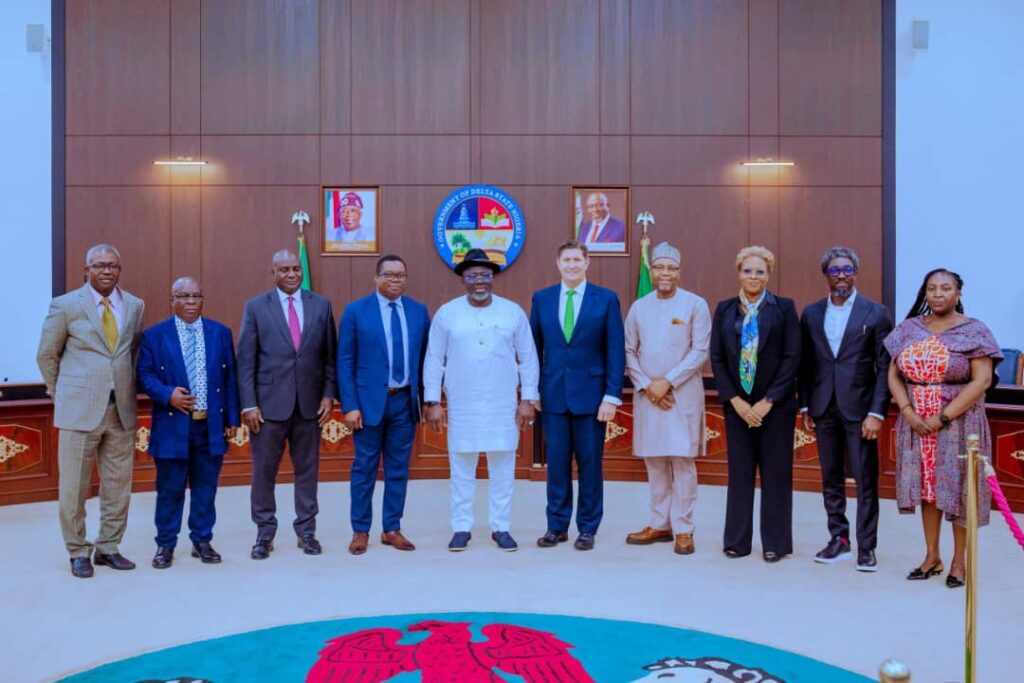
The Governor made the call on Tuesday during a courtesy visit by the management team of Seplat Energy, led by its Chief Executive Officer, Mr. Roger Brown, at Government House, Asaba.
“We’re happy to receive you today,” Oborevwori said. “Since I became Governor, I have monitored your operations closely—how you engage host communities and how you strengthen them through empowerment initiatives. I must say, many of the efforts you’re undertaking are not new to me.”
While commending Seplat’s social investments in areas such as education, teacher training, laboratory development, and healthcare, the Governor stressed the importance of not just employment, but meaningful inclusion at decision-making levels.
“I understand that 30% of your workforce comes from our local communities, and that’s a good start. But I’ve yet to see any of our people in your top management. That must change. Inclusion should go beyond numbers—it must be about growth and real opportunity,” he said.
The Governor also raised concerns over a reported incident involving Chinese personnel working under Seplat’s operations. Although not officially mentioned during the visit, he noted it had to be be discuss privately and warned against any recurrence.
“We cannot allow such incidents to repeat themselves. Peace and mutual respect must be maintained at all levels,” Oborevwori said firmly.
Reaffirming the state’s commitment to maintaining a stable and secure operating environment, the Governor noted that Delta’s recognition at the national level in the oil and gas sector is a result of sustained peace efforts.
“We’ve created an environment where companies like yours can operate freely. Dialogue remains our preferred method for resolving issues with host communities. Confrontation only creates setbacks—for the companies, the communities, and the government,” he said.
Oborevwori also highlighted the importance of responsible resource management, warning that sabotage, unrest, and lack of cooperation ultimately reduce oil output and deter investment.
“Economic sabotage affects our oil production quota, discourages investors, and prevents job creation. If companies can’t operate, they can’t meet their corporate social responsibilities. That’s the reality,” he said.
While responding to Seplat’s disclosure that ₦500 billion in contracts had been awarded to local contractors in the state over the last decade, the Governor expressed optimism for even greater investment. “₦500 billion? Is it $500 billion? By God’s grace, I believe this will soon be measured in dollars,” he quipped.
He assured Mr. Brown and the Seplat team of the state’s continued partnership in fostering growth, peace, and prosperity.
“We will continue to work together—because that is the only way to grow, move the state forward, and uplift both your company and our people,” Oborevwori said.
Seplat CEO Roger Brown, in his earlier remarks, emphasized that Delta State remains a cornerstone of Seplat’s national operations, with two of its most productive onshore blocks located in the state. He outlined the company’s recent commissioning of a new gas plant in Sapele and noted that plans are underway to introduce both Liquefied Petroleum Gas (LPG) and Compressed Natural Gas (CNG) production as part of its contribution to Nigeria’s domestic energy growth.
Brown further disclosed that the company has set a firm target to end routine gas flaring by 2025—five years ahead of the national deadline—underscoring Seplat’s commitment to environmental sustainability. He said the company’s strategy is rooted in long-term community partnerships and sustainable development.
“We are not here for short-term gains,” Brown said. “We are here to stay, to grow with the communities, and to build something that lasts. We believe our success must be shared—through jobs, infrastructure, education, and environmental responsibility. Delta State has played a critical role in that journey, and we see that role expanding even further.”
The Seplat boss added that the company will explore expanding initiatives such as the “Tree for Life” program—an environmental project focused on large-scale tree planting—and continue its investments in science education and health outreach. “We want to be remembered not just for the resources we extract, but for the value we leave behind,” he stated.


