

By Wealth Oghenemaro
Nigeria’s crude oil production suffered a significant disruption on Tuesday as protesters shut down 13 major oil flow stations in Delta State, forcing an estimated 400,000 barrels of crude oil per day offline.
The affected facilities, operated by oil majors including Shell Petroleum Development Company (SPDC), Chevron Nigeria Limited (CNL), and NESTOIL/NECONDE, were occupied by hundreds of women and youths from Ijaw communities across Warri Federal Constituency.
Sources within the petroleum industry disclosed that the protesters effectively grounded operations at the facilities and blocked the movement of personnel and logistics supplies through key waterways servicing the companies.
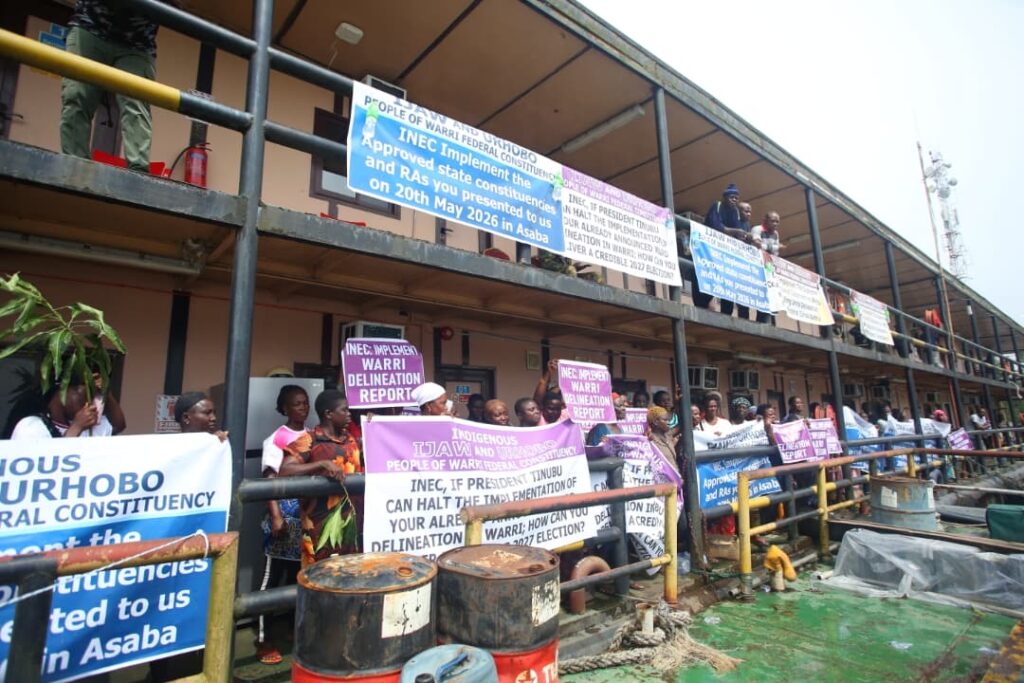
Among the facilities affected are Odidi 1 and 2, Batan, Ogbanabou, Jones Creek, Otunana, Egwa 1 and 2, Abiteye, Makaraba, Olero Creek, Dibi Field, and Opuekeba Flow Stations.
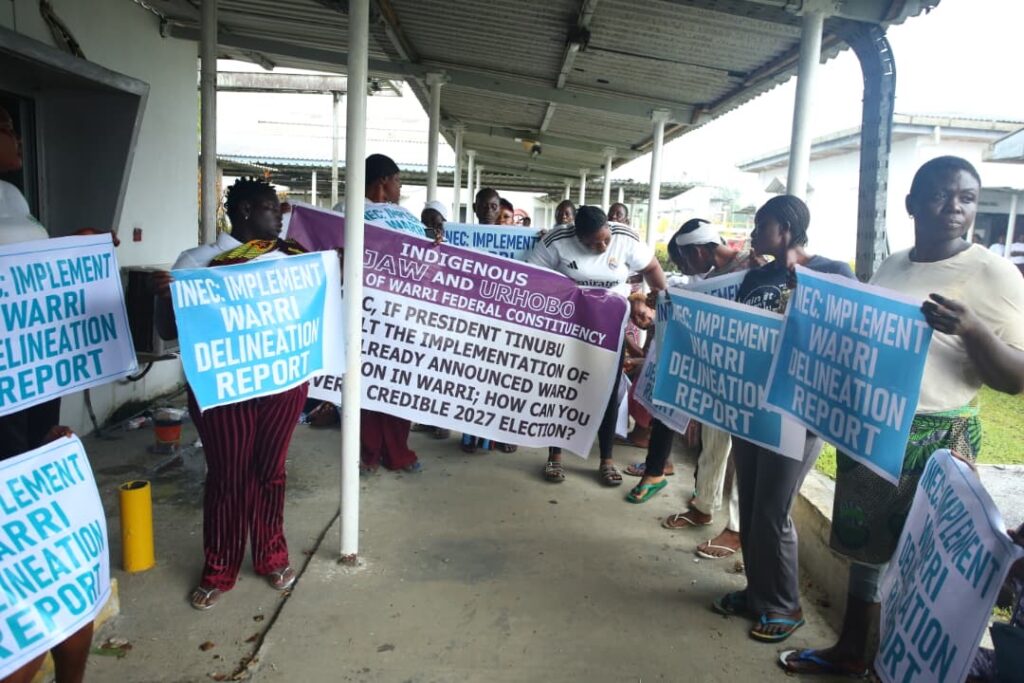
The protesters, drawn from Gbaramatu, Ogbe-Ijoh, Isaba, Egbema and Diebiri Kingdoms in Warri South-West, Warri South and Warri North Local Government Areas, said their action was in response to what they described as delays in implementing the recently concluded ward delineation exercise approved by the Independent National Electoral Commission (INEC).
According to the demonstrators, the delineation exercise, conducted in compliance with a Supreme Court judgment, was aimed at addressing long-standing concerns over political representation within Warri Federal Constituency.
Tensions surrounding the exercise have intensified in recent weeks, with Ijaw and Urhobo groups accusing elements within the Itsekiri ethnic nationality of working behind the scenes to frustrate implementation of the final report released by INEC.
The shutdown came barely a day after Ijaw and Urhobo stakeholders threatened to cripple oil production across the area if the electoral commission failed to give effect to the delineation outcome.
Carrying placards bearing inscriptions such as “Implement Warri Delineation Report,” “Court-Ordered Delineation Must Stand,” and “No Implementation, No Production,” the protesters vowed to maintain their occupation of the facilities until their demands are met.
Speaking on behalf of the demonstrators, Chief (Mrs.) Maria Ebike alleged that INEC had failed to act despite completing consultations and presenting its final report to stakeholders.
She argued that the exercise was designed to ensure equitable representation for all communities in the constituency and claimed that influential interests were working to prevent its implementation.
“We have exercised patience and followed due process. The report has been completed and presented. Yet implementation has been stalled. We will continue this peaceful protest until the right thing is done,” she said.
Ebike further alleged that certain powerful interests within the federal government were influencing efforts to delay the implementation of the report.
The roots of the dispute date back to a 2022 Supreme Court judgment which directed INEC to conduct a fresh ward and polling unit delineation exercise in Warri Federal Constituency.
Following the exercise, INEC unveiled its final delineation report to stakeholders in Asaba on May 20, 2026.
However, the report has since generated controversy among ethnic groups in the area, with disagreements over its implementation deepening tensions across Warri and adjoining riverine communities.
With thousands of barrels of crude oil now shut in and operations at major facilities suspended, concerns are mounting over the potential economic impact if the standoff persists.


